latest blogs

Looking for tips, inspiration, or advice on all things real estate? Check out our blogs! Whether you're buying, selling, or just love staying in the know, you’ll find helpful insights, market updates, staging ideas, and practical tips to make your real estate journey smoother—and maybe even a little more fun.

RSS

Your 2025 Guide to Manitoba's New Real Estate Offer: What Changed and Why It Matters

If you're buying or selling a home in Manitoba, November 1st, 2025 just changed the game. After 30 years of using the same contracts, Manitoba's real estate regulator rolled out completely revamped Offer to Purchase forms and an overhauled Property Disclosure Statement. And trust me, these aren't just minor tweaks—these are substantial changes that affect how deals get done, what sellers need to disclose, and what buyers are responsible for.

Whether you're a first-time buyer, seasoned seller, or somewhere in between, here's what you absolutely need to know about the new rules.

Why This Matters (And Why Now)

Let's be honest: 30-year-old contracts don't cut it in today's real estate market. These updates bring Manitoba in line with other provinces like Ontario and B.C., and codify protections that, until now, existed mainly in legal gray areas. The goal? Speed up money flow for sellers, increase transparency through better disclosures, and create clearer expectations for everyone at the table.

The changes cover three main documents: the Residential Offer to Purchase, the Condominium Unit Offer to Purchase, and the Property Disclosure Statement. If you're doing any kind of real estate transaction in Manitoba involving single-family homes or condos, these forms are now your new reality.

1. The Contract Got a Major Makeover: Two Parts, One Agreement

First things first: the structure of the Offer to Purchase is completely different. Each contract is now split into two distinct parts, and this is actually a game-changer for how we do deals.

Part One: Your Specific Deal Terms
This is where all the unique details of your transaction live—purchase price, closing date, deposit amount, included chattels, conditions (financing, inspection, etc.), and any special terms you've negotiated. Think of this as the custom portion that's specific to your deal.

Part Two: Standard Terms
This section contains all the legal boilerplate that applies to every transaction in Manitoba. Things like buyer and seller obligations, what happens if someone breaches the contract, closing procedures, warranties, and legal protections. By standardizing these terms, everyone's playing by the same rules.

Why split it into two parts? It makes everything clearer. You can focus on negotiating the specifics in Part One without worrying about accidentally changing standard legal protections in Part Two. It also brings Manitoba in line with how other provinces structure their contracts.

Here's the catch though: Both parties must sign both parts of the contract. You can't just sign Part One and call it a day. Both parts together form your complete agreement.

Important detail: Your name on the contract must now match your government-issued ID exactly. No nicknames, no abbreviations. If your driver's license says "Elizabeth," you can't sign as "Liz." This might seem picky, but it's all about preventing fraud and ensuring everyone is who they say they are.

Oh, and one more thing: no witness required. The new forms can be signed electronically or on paper without needing a witness, which streamlines the whole process.

2. The 6:00 PM Default (This Actually Protects Everyone)

If you don't specify a closing time, it now defaults to 6:00 PM on possession day. This isn't arbitrary—there's smart reasoning behind it.

For sellers: This timing can lead to faster access to your sale proceeds, especially in cash deals. Since lawyers typically won't pay out until the day after a 6:00 PM closing, you could see your money as early as the next business day.

For buyers: That overnight buffer gives you crucial protection. You can verify vacant possession and check for any substantial damage before your lawyer releases the money to the seller. If you find a problem, there's time to freeze the funds before they're gone.

Practical tip: This is especially important if you're getting a mortgage. Many lenders—particularly those with funding departments in Toronto—won't release mortgage funds until possession day. A 6:00 PM closing gives them time to get the money to your lawyer's trust account and for your lawyer to courier a cheque to the seller's lawyer.

What this means for your moving plans: Arrange for movers the day after possession, not on possession day itself. And avoid weekend or holiday possessions if you're getting a mortgage—some lenders simply won't release funds on non-business days.

3. The Full Payment Rule (This One's Big)

Here's where things get serious: under the new forms, the purchase price must be paid in full by possession. Period.

"But what if my financing is delayed?" you might ask. Good question. You can extend up to 7 days, but it's going to cost you. We're talking interest at the Bank of Canada rate plus 7% (currently around 9.25%), and you'll be on the hook for any reasonable extra costs the seller incurs. Plus, you can't do any renovations until the seller gets paid, and the seller keeps a lien on the unpaid balance.

For buyers: This is why checking the "mortgage" box in Section 4 is crucial—even if you're not 100% certain you'll need financing. Checking this box gives you that 7-day safety valve. Without it, if you don't have all the money by possession time, you could be in immediate default.

The form also requires you to specify the approximate mortgage amount. You can use a range ("$200,000-$250,000") or even write "TBD" if uncertain, though specific numbers make your offer more competitive.

Practical advice for buyers: Don't mess around with your financing. Get pre-approved early, stay in constant contact with your lender, avoid rush closing dates, and have a backup plan. The days of casually extending your closing date are over. Mid-month closings are generally less congested than end-of-month rush hours.

4. Buyers Must Actually Try (Yes, Really)

The new forms explicitly require buyers to act in good faith to meet their conditions. Translation? You can't just include a financing condition and then half-heartedly apply for a mortgage so you can walk away from the deal.

If your financing falls through, you'll need to provide evidence—like an actual mortgage denial letter—proving you made a genuine effort. This codifies what was already common law, but now it's right there in black and white on the contract.

This applies to ALL conditions: Whether it's financing, home inspection, lawyer approval, or any other condition, you need to make legitimate efforts to fulfill them. Sellers can now require proof of your good faith efforts before agreeing to return your deposit.

Bottom line: Document everything. Keep all your correspondence with lenders, inspectors, and anyone else involved in meeting your conditions. If something goes sideways, you'll need proof you did your part.

5. Sellers: Your Disclosure Game Just Got Serious

For sellers, the new Property Disclosure Statement represents the biggest shift. The old version had you answer passive "are you aware of..." questions, making it easy to claim ignorance. The new version changes everything.

What's different:

Positive Statements: You're now making affirmative representations about your property's condition. When you mark "correct" beside a statement like "The roof is in good condition," you're affirming you actually know this to be true—not just that you're unaware of problems.

ALL Latent Defects: The final question on the PDS now requires you to disclose every latent defect (hidden issues not visible during a reasonable inspection), not just the serious ones. This goes well beyond what's required in the offer itself, which only mandates disclosure of "material" defects—those that are dangerous, pose health hazards, or make the property unfit for its intended purpose.

What this means: If you answer "correct" when something is actually wrong, it will be much harder to later claim you didn't know. This creates a strong incentive for honest disclosure and increases your legal liability for negligent or fraudulent misrepresentations.

Your rights as a seller: You have the absolute right to answer "do not know" to any question you're genuinely uncertain about. You can also decline to provide a PDS entirely, though this may make your property less attractive to buyers. You can still sell "as is"—just make sure this is clearly stated in Section 9 of the offer or disclosed in your PDS.

6. Standard Warranties Are Now Built In

Section 9 of the new offer includes standard warranties that used to require negotiation. The big one? All systems and items must be in proper working order as of possession.

"Proper" is key here—it's much less subjective than the old "working order" warranty. There's a clear difference between something that's barely working and something that's working properly.

For sellers: These warranties are now automatic, but you can modify them in one of two ways:

  1. Write limitations or "as is" language directly in Section 9 of Part 1

  2. Disclose defects in your Property Disclosure Statement, which will override the standard warranties

Important note: The old "survival clause" has been eliminated. Warranties and representations don't automatically survive closing—they're based on the contract terms and common law.

7. Winnipeg-Specific Concerns: Water Bills and Permits

If you're in Winnipeg, pay special attention to these two issues:

Water Meter Readings:
You must ensure an actual water meter reading has been submitted within 90 days before closing. This isn't paranoia—estimated readings can lead to shockingly high bills. We're talking potential bills of $100,000 or more in extreme cases involving leaks or grow operations.

What to do: Submit an actual water meter reading as soon as you list your property. Don't rely on estimated readings.

Open Permits:
Any building permits you obtained must be closed before possession. Check your permit status at the City of Winnipeg's permit portal: https://ppdportal.winnipeg.ca/Permits/PropertyPermitSearch/Start.jsp

Note: Permits showing "closed without final inspection" are fine and don't require action. Development permits (marked "DP") remain open by nature and don't need closing.

8. The Non-Resident Seller Situation: Act Immediately

If you're not a Canadian resident (or will become a non-resident before closing), this requires immediate, hair-on-fire attention.

Federal law requires buyers to withhold 25% of the sale price for personal-use properties, or up to 50% for income-generating properties, to secure payment of Canadian taxes. This money goes to the Canada Revenue Agency and can't be released until you receive a Compliance Certificate, which can take months or even up to a year.

Critical consideration: Before you even list, you must confirm there will be enough equity after this withholding to pay off your mortgage, property taxes, and real estate commissions. If the numbers don't work, your sale can't close.

What to do: If you might be a non-resident, consult with an accountant or tax lawyer immediately—ideally before listing your property. The seller is legally required to apply for a Compliance Certificate within 10 days of closing or face penalties of $30 per day.

9. What Happens with Damage After the Offer?

The new contract clarifies what happens if your property is damaged between offer acceptance and possession:

Non-Substantial Damage:
Any damage after the offer is the seller's responsibility. The buyer is entitled to compensation or rectification, but they can't terminate the purchase unless the damage is substantial.

Substantial Damage:
Sellers must notify buyers immediately. Previously, cancelling the purchase was the only remedy. The new offer allows for other contingencies in addition to cancellation. If substantial damage occurs and the seller's lawyer hasn't yet paid out the funds, the buyer's lawyer can freeze the money until the issue is resolved.

Seller obligation: If you provided a PDS, you must notify the buyer of any change to any answer, including any damage that occurs.

10. New Seller Obligations and Requirements

Beyond disclosure, sellers have several new responsibilities:

Homestead Consents:
If you have a non-owner spouse or common-law partner, they must sign a separate homestead consent form. This happens twice: once at the offer stage and again at closing. Without this consent, your offer is unenforceable (though not void).

Authorized Representatives:
If you're selling as an executor, attorney under power of attorney, or other representative, you'll need to show the proper documentation. Land Titles has stringent requirements, and even lawyer-drafted powers of attorney may not be sufficient.

Mortgage Appraisals:
The offer now requires you to allow appraisal or inspection for the buyer's mortgage financing. You also must sign amendments or a new offer to add or delete a buyer for financing purposes.

Moving Forward with Confidence

These changes to Manitoba's real estate offer and property disclosure statement represent a more balanced, transparent approach to buying and selling homes. Sellers benefit from faster access to their money and standardized terms, while buyers gain stronger protections through enhanced disclosure requirements and built-in warranties.

The key to success? Understand your obligations, act on them early, and don't hesitate to ask questions. Whether you're required to submit water readings, disclose property defects, ensure your mortgage funds on time, or prove good faith efforts to meet conditions, staying ahead of these requirements will lead to a smoother, less stressful transaction.

Key takeaways:

  • Both parts of the contract must be signed

  • Name must match government ID exactly

  • Default possession time is 6:00 PM

  • Payment must be made in full by possession (or within 7 days with penalties)

  • Buyers must demonstrate good faith in meeting conditions

  • Sellers make positive representations, not passive statements

  • Standard warranties are now built into the contract

  • Water readings and permits matter in Winnipeg

  • Non-resident status requires immediate professional consultation

Remember, these changes apply to completed single-family homes and condominiums. Commercial properties and other property types continue using existing forms.

Work closely with your real estate agent and lawyer, take the time to understand what's expected of you, and approach your transaction with transparency and good faith. That's the recipe for success under the new rules—and it's ultimately better for everyone involved.

Have questions about how these changes affect your specific situation? These 2025 changes affect every buyer and seller in Manitoba, and every situation is a little different.
If you’re wondering what the new Offer to Purchase or Disclosure updates mean for your next move, I’m here to help.

Don’t wait, Reach out anytime — I’ll walk you through what’s changed, how it impacts your plans, and what to watch for before signing.

Let’s make your next move simple, clear, and stress-free.

Read

🏡 Winnipeg Home Prices Hit Record Highs – May 2025 Market Report

The Winnipeg real estate market continued to show strength in May 2025, with home prices in Winnipeg reaching historic highs for both residential detached homes and condominiums. Whether you're thinking of selling a home in Winnipeg or keeping an eye on homes for sale in Winnipeg, staying informed on the latest trends is essential in this competitive landscape.

📈 Winnipeg Housing Market Overview – May 2025

The numbers are in, and they reflect a market driven by high demand and limited inventory:

  • Total MLS® Sales: 1,789 (+4% vs. May 2024)

  • Active Listings: 3,650 (–11% YoY)

  • Total Dollar Volume: Over $737 million (+12%)

This was the highest total dollar volume for any May on record, a clear sign that the Winnipeg housing market remains hot.

🏠 Residential Detached Homes – Breaking Records

Detached properties led the way with:

  • Sales: 1,259 (+6%)

  • Average Price: $459,320 – an all-time high

Most activity occurred in the $400K–$499K range, which made up 25% of all detached home sales. Notably, 23 homes sold for over $1 million, with the highest surpassing $3M.

🏘️ Top Neighbourhoods for Detached Sales:

  • Waverley West (Winnipeg)

  • East Transcona (Winnipeg)

  • Steinbach (Rural)

  • Morden/Winkler (Rural)

🏢 Winnipeg Condo Market – Price Peaks Amid Fewer Sales

While condo sales in Winnipeg dipped 16% from last year, average prices hit a record high of $297,864 – a 7% increase. The $200K–$299K price point dominated the condo segment, with one luxury unit selling for over $1.5 million.

🏙️ Hottest Areas for Condo Sales:

  • Osborne Village

  • Fort Richmond

  • Niverville/Ritchot (Rural)

  • La Salle (Rural)


📊 Year-to-Date Summary – 2025 So Far

Compared to the first five months of 2024:

  • All MLS® Sales: 6,094 (+7%)

  • Detached Avg. Price: $456,972 (+9%)

  • Condo Avg. Price: $277,954 (even YoY)

The year-to-date data shows that property values in Winnipeg are continuing to rise, especially in the residential detached home market.

Source: Winnipeg Regional Real Estate Board.


🔑 What This Means for Buyers & Sellers

Thinking of buying a home in Winnipeg? Act fast—competition is fierce, especially in mid-range price brackets. Pre-approvals and strong offers are key in today’s market.

Selling a home in Winnipeg? This may be the best time to list. Record-setting Winnipeg home prices and low inventory create the perfect environment to maximize your sale price.


📞 Let’s Chat About Your Next Move

📲 204.960.7629
📧 tatianavkennedy@gmail.com

Whether you're exploring Winnipeg MLS® listings, wondering about your home’s value, or need guidance navigating the Winnipeg real estate market, I’m here to help you make confident, informed decisions.

Read

Possession Day Checklist for First-Time Home Buyers: What to Do When You Get the Keys

Possession day is one of the most exciting moments in the home buying journey — especially for a first-time home buyer. But once you’ve stepped through the door of your new home, there are a few key steps you’ll want to take to make sure everything is in order and safe.

Whether you're buying in Winnipeg or elsewhere, this new homeowner checklist will help you get started with confidence and peace of mind.


✅ Your New Home Walk-Through: 8 Must-Do Steps

1.  Take Photos of Your Meter Readings

Before using any utilities, take clear photos of your hydro and water meters. These readings will help prevent billing disputes and ensure you only pay for what you use from possession day onward.

2.  Test All Fixtures and Systems

Go room by room and check that:

  • All light switches and outlets work

  • Taps are running properly

  • Toilets flush and sinks drain without issue

  • Water pressure is normal

It’s always better to identify and address any issues early!

3. Test All Major Appliances

Ensure that your:

  • Fridge, stove, oven

  • Dishwasher, washer & dryer

  • Furnace and A/C

… are functioning as expected. If anything was included in your purchase agreement, now’s the time to test it.

4.  Confirm All Inclusions

Check that everything promised in the purchase contract — such as curtain rods, built-in shelving, or garage remotes — was left behind by the previous owner.


🧯 Safety Checks Many New Homeowners Forget

New homeowners often overlook some critical home safety tips that could make all the difference:

  • 🔥 Test smoke and carbon monoxide detectors to ensure they’re working

  • 🚿 Locate your main water shut-off valve in case of emergency

  • Find and label your electrical panel breakers

  • 🧰 Check for leaks under sinks or in utility areas

  • 🔐 Inspect door and window locks for proper function and security

Check Your Furnace Filter

A dirty furnace filter can reduce air quality and system efficiency. Replace it if it’s clogged or dusty — it’s a small fix that makes a big difference.

Do a Final Walk-Through

Look for any signs of damage that weren’t noticed before: cracked tiles, damaged baseboards, drafty windows, or sticking doors. It’s your chance to make sure everything is exactly as expected.


🎉 Celebrate!

You did it — you’re a homeowner! Take a deep breath, snap a photo, and enjoy your new space. This is the beginning of a brand-new chapter. 🥂🏡

🤝 Need Help on Possession Day? I’ve Got You Covered

As your Realtor in Winnipeg, I always do my best to be there on possession day to help walk through your new home with you. It’s just one more way I support you every step of the way.


📲 Thinking of Buying Your First Home?

Whether you're just starting to look or ready to make an offer, I’m here to guide you with expert advice, a touch of humour, and a whole lot of experience.

👉 Contact me today to start your home buying journey!

Tatiana Kennedy | 204.960.7629 

Read

Buying & Selling a Home in Winnipeg in 2025: What You Need to Know

Thinking of buying and selling a home in Winnipeg in 2025? You’re not alone. With our ever-evolving Winnipeg real estate market, many homeowners are planning big moves—whether that’s upsizing, downsizing, or finding the perfect forever home in a different neighbourhood.

But let’s be real: doing both at once can feel like a lot. The good news? It can be smooth, stress-free, and even fun—with the right plan and the right Realtor (hi, that’s me 👋).

Here’s how I help my clients navigate this journey with confidence:


💬 1. Start with Your Financing Strategy

Before we prep your current home for sale or book showings, we need to know your numbers.

  • Can you buy before you sell?

  • What are your financing options in today’s Winnipeg housing market?

  • Could bridge financing work for your situation?

Connecting with a trusted Winnipeg mortgage broker early on gives you clarity—and makes every step that follows easier and more strategic. 


🏘️ 2. Know What You're Looking For in Winnipeg

From character homes in Wolseley to new builds in Sage Creek, Winnipeg has something for everyone—but timing and availability vary.

If your dream home has unique features or is in a competitive area like Crescentwood, River Heights, or Bridgewater, it may take more time to find the perfect fit. That’s why we plan early and stay ready to move quickly when the right listing appears.

I help clients stay focused and flexible in their home search—whether it’s your first time buying or your fifth.


🤝 3. Work With a Realtor Who Offers Custom Service (That’s Me!)

Buying and selling simultaneously is all about timing and communication. I work closely with every client to build a plan that’s tailored to your goals, your timeline, and your comfort zone

We’ll cover:

  • When to list your current home

  • How to stage and prepare it (I have a background in interior design and home staging, too!)

  • Possession timelines and offer strategies

  • Contingencies to protect you during the transition

And because I’m fluent in Spanish and conversational in French, I’m able to support a wide range of buyers and sellers in their preferred language.

My approach is boutique, honest, and tailored. You’ll never be just another transaction.


🎯 Let’s Make Your 2025 Real Estate Goals Happen

Whether you’re moving within Winnipeg or relocating from another city, I’m here to help you buy and sell with confidence.

No cookie-cutter service—just genuine, professional guidance from a Realtor who’s been doing this since 2009. I’ve also worked with Brookfield Relocation Services and understand the nuances of RCMP and military moves to Winnipeg.

📩 Ready to talk about your 2025 real estate goals?
Let’s connect and create a strategy that works for you.

Contact Me | Instagram | Facebook


📍 Proudly serving Winnipeg and surrounding areas

Let’s make your next chapter your best one yet.

Read

April 2025 Market Snapshot: Winnipeg’s Spring Market Heats Up

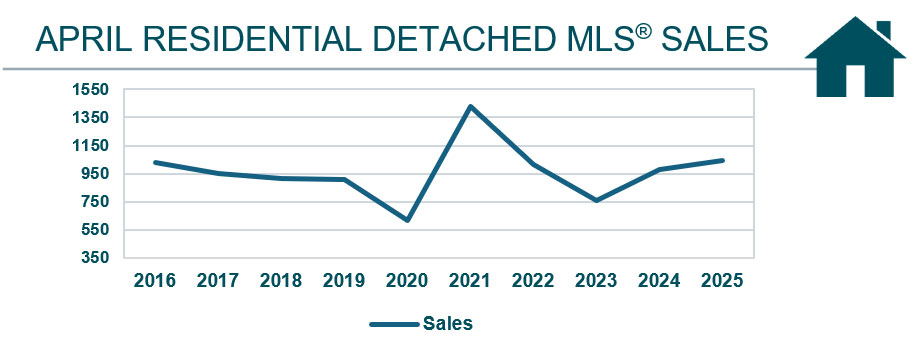
If you're thinking about making a move, April's real estate numbers are speaking loud and clear—Winnipeg’s market is buzzing this spring! We saw a notable increase in buyer activity, with MLS® sales jumping 8% over April 2024. That’s 1,523 homes sold, making this the second-best April on record for overall sales and dollar volume, right behind the red-hot market of 2021.

Despite more homes flying off the market, active listings were actually down 13% compared to last year. That means inventory is tighter, and motivated buyers are acting fast—often with strong offers in hand. The total dollar volume exceeded $623 million, up 12% year-over-year, showing just how much confidence buyers are bringing to the table.

Detached homes stole the spotlight again, with 1,043 sales (up 7%) and an average sale price of $465,402—also a 7% increase. This price point marks the second-highest on record for residential detached, just shy of the all-time high we hit in March. Clearly, well-presented single-family homes are still in high demand.

On the condo side, it was a slightly different story. Sales dipped by 4%, and the average condo price came in at $274,483, down 4% from April 2024. But don’t let that fool you—condos remain an appealing choice for first-time buyers, investors, and downsizers, especially with rising detached prices.

Residential Detached Sales:

  • Waverley West had the highest number of residential detached home sales in Winnipeg.

  • Charleswood ranked second in Winnipeg.

  • 23 homes sold over $1 million, with the highest at $4 million.

    • In comparison, April 2024 had 18 $1M+ sales, with the highest just over $2 million.

Condominium Sales:

  • Osborne Village had the most condo MLS® sales in Winnipeg.

  • Waverley West followed as the second most active condo area in the city.

  • The most active price range: $175,000–$199,999 with 26 sales (13% of total condo sales).

  • Second most active range: $225,000–$249,999 with 22 sales (11% of total condo sales).

In today’s fast-moving market, buyers need to be prepared before they even step inside a showing. That means getting pre-approved, understanding your budget, and being ready to make a strong, confident offer when the right home comes along. Working with a Realtor® who knows how to navigate a competitive market is crucial—I can help you strategize, negotiate, and move quickly when opportunity knocks.

For sellers, first impressions matter more than ever. With buyers eager and inventory tight, showcasing your home at its absolute best can make all the difference. From staging tips to small updates that add big value, I’m here to guide you through the selling process and help you make the most of today’s hot market.

Wondering what homes are selling for in your neighborhood?

The best way to get an accurate picture is with a Comparative Market Analysis (CMA)—a detailed report that shows how your home compares to similar properties recently sold in your area. I offer this as a complimentary service, and it’s a great first step whether you’re just curious or seriously considering selling. Reach out to me anytime to set one up!

Source: Winnipeg Regional Real Estate Board.

Read

Start Smart: Why Pre-Approval and the Mortgage Stress Test Matter More Than Ever

Thinking about buying a home?

Before you get swept away by beautiful listings and open houses, let’s talk about a crucial first step: getting pre-approved for a mortgage. As a Realtor, I see firsthand how pre-approval can save buyers from unnecessary stress and disappointment—and help them act quickly when they find the right home.

Why Pre-Approval Is So Important

You’ll Know Your True Budget
Pre-approval gives you a clear, realistic budget. No more guessing or getting attached to homes outside your range.

Sellers Will Take You Seriously
In a competitive market, a pre-approval letter shows sellers you’re ready and able to buy—giving you an edge over buyers who aren’t prepared.

It Speeds Up the Process
When you find the perfect home, you can move quickly and confidently without financing delays.

It Reduces Stress
Knowing exactly where you stand financially takes a major layer of worry off your plate—and mine too as your Realtor!

It Protects You From Market Shifts
With everything going on globally—including the recent trade wars in the US—markets and interest rates can be unpredictable.
Economic uncertainty can push rates higher, meaning a pre-approval not only locks in your rate for a period but also helps shield you from sudden financial changes that could impact what you can afford.

 Understanding the Mortgage Stress Test

When you get pre-approved, there’s also another important step you’ll encounter: the Mortgage Stress Test. While I’m not a lender myself, I’ve learned a lot about how it impacts buyers.

The mortgage stress test is designed to ensure that you can afford your mortgage not just at today's rate, but if rates were to rise significantly in the future. Here’s the simplified version:

  • You must qualify either at the Bank of Canada’s benchmark rate (currently around 5.25%) or

  • At your lender’s offered mortgage rate plus 2%—whichever is higher.

For example, if your lender offers you a mortgage rate of 4%, you would have to qualify at 6%. If their 4% + 2% = 6% is higher than the Bank of Canada's 5.25%, you qualify at 6%. But if your lender's rate plus 2% doesn’t reach the Bank of Canada rate, you must qualify at the 5.25%.

Why is this important?
The stress test protects you if interest rates rise, ensuring you can comfortably afford your mortgage today—and tomorrow.

📝 Bottom Line

Getting pre-approved and understanding the mortgage stress test will give you confidence, set realistic expectations, and help you buy the right home for your future.


📞 Ready to Get Started?

If you’re thinking about buying a home, let’s start the smart way—with a pre-approval.
I can connect you with trusted mortgage professionals and guide you through every step of the journey.

📱 Call or text me at 204.960.7629
📧 Email: tatianavkennedy@gmail.com

Let's make your home dreams a reality! 🏡✨

Read

Staging Secrets: Budget-Friendly Tips to Make Buyers Fall in Love With Your Home

Selling your home doesn’t have to mean spending a lot of money on renos. With a few strategic, cost-effective staging tricks, you can create a space that captures 💕—and helps your listing stand out. Whether you're working with a tight budget or just want the biggest return on your investment, these staging tips will give you the best bang for your buck. 


1. Declutter & Depersonalize (Free!)

📦 Create a clean slate so buyers can imagine themselves in the space. Box up family photos, personal memorabilia, and excess decor. Less is always more when it comes to staging.

2. Fresh Coat of Neutral Paint (~$30-$60/room)

🎨 A simple paint refresh in soft, neutral tones (think greige, soft white, or warm taupe) can make rooms feel larger, brighter, and more inviting.

3. Curb Appeal Counts (~$100 or less)


🌼 First impressions matter. Trim hedges, add a fresh welcome mat, clean the front door, and plant some seasonal flowers in pots to create a warm welcome.

4. Lighting Update (~$50-$150/fixture)
💡 Swap out dated light fixtures for modern, affordable options. Brighter, well-lit rooms feel more open, cheerful, and spacious.

5. Strategic Furniture Placement (Free to low cost)
🛋️ Rearrange furniture to create flow and highlight the room’s function. Make sure each space has a clear purpose and doesn't feel overcrowded.

6. Staging with Purpose (~$50-$200 for small accents)
🖼️ Use cozy, coordinated accessories like throw pillows, rugs, and lamps to give each room a “story”—like a reading nook, office space, or relaxing retreat.

7. Mirror Magic (~$50-$100)
🪞 Hanging mirrors in small or dark spaces can reflect light and make rooms appear larger and brighter. They're functional and decorative!


8. Scent Matters (Free to ~$20)
🍋 A clean, fresh scent leaves a lasting impression. Open windows for fresh air or use subtle diffusers. Avoid overpowering or artificial smells.

9. Bathroom Boost (~$50)
🛁 New towels, a clean shower curtain, and a little greenery can transform a bathroom into a spa-like space.

10. Show Off Storage (Free)
🚪 Clear out 50% of what’s in your closets and cabinets. Buyers will peek, and you want to show off how spacious your storage areas are.

Staged to Sell.

Styled to Impress.

Let’s make your home stand out. ✨

With a little creativity and a modest investment, you can stage your 🏠 to appeal to today’s buyers—helping it sell faster and for top dollar. Often, it’s not about breaking the bank with major renovations, but about refreshing what you already have. A simple reworking of furniture placement, updated accessories, or a few strategic tweaks can completely transform the feel of your home.

Need help making your space shine? I’d love to walk through your home with you and share personalized staging tips tailored specifically to your layout and style. I’m here to help you maximize your home’s potential—whether that’s through small updates, clever styling, or highlighting its best features. Let my eye for design and real estate expertise guide you so we can get the biggest bang for your buck!

Read

Top 10 Tips to Consider Before Writing an Offer on a Home

Top 10 Tips to Consider Before Writing an Offer on a Home

Making an offer on a home is an exciting milestone—but it's also a big decision that requires careful thought and strategy. Before you jump in, here are 10 key tips to consider that can help you feel confident, prepared, and in control of the process.

1. Get Pre-Approved for a Mortgage

Before anything else, make sure you’re financially ready. A mortgage pre-approval shows sellers you’re a serious buyer and helps you understand your budget—so you can make an offer with confidence.

2. Know the Market

Are you in a buyer’s market or a seller’s market? This can significantly influence your offer strategy. In a hot market, you may need to act quickly and come in strong; in a slower market, you may have more room to negotiate.

3. Research Comparable Sales

Look at recent sales of similar homes in the neighborhood to get a sense of what the property is worth. I’ll help you analyze this data to ensure your offer is competitive but fair.

4. Understand the Seller’s Motivation

If possible, learn a bit about the seller’s situation. Are they looking for a quick sale? Are they emotionally attached to the home? These details can guide how you structure your offer and your terms.

5. Decide on Your Must-Haves vs. Nice-to-Haves

Think clearly about what’s non-negotiable for you and what you can be flexible on. This clarity will help if you end up in a multiple-offer situation and need to adjust your terms.

6. Think Beyond the Price

Your offer isn’t just about the number. Consider including a flexible closing date, minimizing conditions, or offering a larger deposit to strengthen your offer. I’ll help tailor these terms to suit both your needs and the seller’s.

7. Plan for the Home Inspection

Even in a competitive market, I always recommend a home inspection when possible. It gives you peace of mind and may help uncover issues you’ll want to address—or use to negotiate repairs or pricing.

Why Home Inspections are a good idea.

A home inspection is one of the smartest steps you can take when buying a home. It gives you a clear understanding of the property's condition and can uncover issues that may not be visible at first glance—saving you from costly surprises down the road. In competitive markets where offers move fast, some buyers are opting for a pre-inspection before submitting an offer. This allows you to make an informed, confident decision while still staying competitive. Whether it’s done before or after your offer, a professional inspection is a valuable tool to protect your investment and give you peace of mind.

8. Consider Potential Upgrades

Don't overlook a home just because it needs a little love. With my background in interior design and staging, I can help you see the hidden potential and envision how simple updates could transform the space into your dream home.

9. Be Prepared for Emotions

Buying a home is a deeply personal experience. Try to stay calm and focused, especially if negotiations get tense or if you’re competing with other buyers. I’ll be there to guide you through every high and low.

10. Trust Your Realtor (That’s Me!)

Your agent is your biggest asset during this process. I’ll help you evaluate the property, draft a strong offer, and advocate for your best interests every step of the way.

Thinking of making an offer soon? Let’s connect and make sure you’re fully prepared to take the leap. The right strategy can make all the difference.

Read
The trademarks REALTOR®, REALTORS®, and the REALTOR® logo are controlled by The Canadian Real Estate Association (CREA) and identify real estate professionals who are member’s of CREA. The trademarks MLS®, Multiple Listing Service® and the associated logos are owned by CREA and identify the quality of services provided by real estate professionals who are members of CREA. Used under license.